Introduction
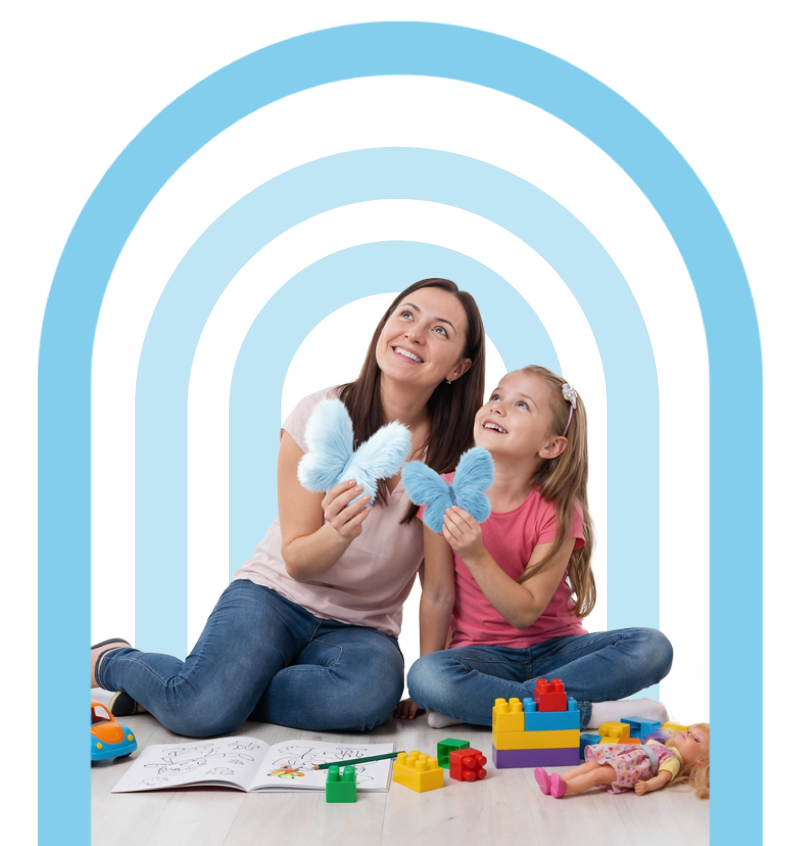
When parents first hear about DIR/Floortime, many picture a therapist sitting on the floor with their child, following their lead through play. That image is accurate, but it’s only part of the story. Where Floortime happens matters just as much as how it happens. The environment, the materials, the rhythm of the day, and the people in the room all shape how a child engages, regulates, and grows.
For many families across New Jersey, a center-based setting offers something they simply can’t replicate at home: a purposeful, sensory-considered space designed entirely around developmental progress. At Dream DIR, our center serves as a developmental hub where children build trust, parents gain confidence, and therapists can deliver consistent, high-quality sessions tailored to each child’s stage of growth.
In this guide, we’ll walk you through what center-based DIR/Floortime therapy looks like, why so many New Jersey families choose this setting, and how it fits within a broader plan that may also include in-home, school, and parent training services.
What Is Center-Based DIR/Floortime Therapy?
Center-based DIR/Floortime therapy takes place in a dedicated clinical space designed to support a child’s developmental, sensory, and emotional needs. Unlike in-home therapy, where sessions adapt to the family’s living environment, a center is intentionally built around the principles of the DIR model, Developmental, Individual-differences, and Relationship-based.
That means every corner of the space, from the sensory tools to the play areas to the lighting, is curated to help children move through the six Functional Emotional Developmental Capacities (FEDCs). Therapists have immediate access to a wide range of developmentally appropriate materials, allowing them to follow a child’s lead while gently expanding their circles of communication.
A typical center-based session at Dream DIR involves:
- One-on-one time with a trained DIR/Floortime therapist
- Play-based interaction tailored to your child’s developmental stage
- Sensory-supportive tools (swings, climbing structures, tactile materials, calming corners)
- Parent observation and coaching opportunities
- Structured transitions that help children practice regulation
The goal isn’t to make children “comply”, it’s to help them connect, communicate, and engage with the world in deeper, more meaningful ways.
Why New Jersey Families Choose Center-Based Therapy
New Jersey is home to one of the most active early intervention and developmental therapy communities in the country. Families here have options, and many of them, after exploring different settings, gravitate toward center-based care for a few specific reasons.
1. A Sensory-Considered Environment
Homes are wonderful, but they’re also full of distractions: siblings, pets, household noise, mail being delivered, and the dryer buzzing. For children who are easily overwhelmed or who struggle with regulation, these unpredictable inputs can make it harder to stay engaged in therapy.
A center provides a controlled sensory environment. Lighting, sound, textures, and even the layout of the room are designed to support focus and emotional regulation. In our sessions, we’ve seen children who initially struggled to sit through a single activity at home settle into 45-minute play sequences once they had a predictable, regulated space to work in.
2. Access to Specialized Equipment
Therapeutic swings, ball pits, climbing walls, weighted materials, sensory bins, and adaptive seating are expensive, and most families don’t have the space to set them up at home. A center gives children access to a much wider range of tools that support proprioceptive, vestibular, and tactile development.
For a child working on motor planning or sensory integration alongside their developmental goals, this access can meaningfully accelerate progress.
3. Built-In Peer and Social Opportunities
While DIR/Floortime is typically delivered one-on-one, a center setting naturally exposes children to other children, other adults, and shared spaces. For many of our New Jersey families, this is a major advantage. Children learn to navigate transitions, observe peers, and practice early social referencing, all skills that translate to preschool, daycare, and school environments.
4. Consistency and Routine
Children thrive on predictability. Coming to the same space, with the same therapist, surrounded by the same familiar materials, helps build a sense of safety. That safety is the foundation on which all DIR/Floortime work rests.
How the Center Environment Supports Developmental Progress
DIR/Floortime is built around helping children climb the developmental ladder, from shared attention and engagement, to two-way communication, to complex problem-solving and abstract thinking. Each of these stages requires a slightly different kind of support, and a well-designed center can flex to meet a child wherever they are.
For a child working on shared attention, our therapists might use a quiet corner with a single, highly engaging toy to help them tune in. For a child working on two-way communication, we might set up an obstacle course that requires back-and-forth exchanges to navigate. For older children working on logical thinking and emotional ideas, we use pretend play setups, a play kitchen, a doctor’s office, a puppet theater, to help them explore concepts like fairness, frustration, and friendship.
The flexibility of the space means therapists never have to compromise on the activity that would best serve the child at that moment.
A Real Example from Dream DIR
One of our families came to us when their son was just shy of three. He had been receiving services through New Jersey’s Early Intervention program but was about to age out, and his parents felt he was still struggling to engage in sustained interactions. He’d make brief eye contact, then drift. He’d start a play sequence, then wander off. His parents were exhausted and unsure whether what they were doing at home was making a difference.
In our center, we started slowly. The first few sessions were spent simply following his lead, joining him at the sensory bin, narrating what he was doing, and gently inserting small playful obstacles to invite a response. Within a few weeks, we saw him initiating play with his therapist. By month three, he was opening and closing dozens of circles of communication in a single session. By month six, his parents reported he was using the same back-and-forth play patterns at home with his older sister.
The center wasn’t magic, but it gave him a consistent, regulated, deeply attuned space to practice the skills that mattered most. And it gave his parents the chance to observe, ask questions, and bring those strategies home with them.
How Center-Based Therapy Fits With Dream DIR’s Other Services
Center-based therapy is rarely the only piece of a child’s developmental plan. At Dream DIR, we believe in supporting children across all the environments they live and learn in. That’s why our center-based work pairs naturally with:
- In-Home Therapy, where children practice new skills in their most familiar environment
- School & Daycare Therapy, where therapists coach educators and support children in real-world group settings
- Parent Training, where families learn how to embed DIR/Floortime principles into everyday routines
Many of the New Jersey families we work with start with center-based sessions, then add in-home or parent training as their child’s goals evolve. Others begin with in-home work and transition to the center as their child becomes ready for a more structured setting. There’s no single right path, only the path that fits your family.
Is Center-Based DIR/Floortime Right for Your Child?
Center-based therapy tends to be a strong fit for children who:
- Benefit from a sensory-regulated environment
- Are working on transitions, routines, and engagement with new adults
- Need access to specialized therapeutic equipment
- Are preparing for preschool, daycare, or school environments
- Have parents who want hands-on coaching and observation opportunities
That said, every child is different. The best way to know whether center-based therapy is right for your child is to talk with a trained DIR/Floortime professional who can assess your child’s developmental profile and recommend the setting or combination of settings that will serve them best.
Conclusion
Choosing the right therapy setting is one of the most important decisions a parent can make. A center-based environment offers something powerful: a space designed entirely around your child’s development, staffed by therapists trained to follow their lead and expand their world one circle of communication at a time.
At Dream DIR, every session is built on the belief that children grow best when they feel seen, safe, and connected, and that’s exactly what our center-based floortime therapy in New Jersey is designed to provide.
We’d love to hear about your child and share how our center-based program might fit into your journey. Reach out to us today!
Frequently Asked Questions
What age range is appropriate for center-based DIR/Floortime therapy in New Jersey?
Center-based DIR/Floortime therapy is appropriate for children from infancy through school age, and even into adolescence, depending on the child’s needs. At Dream DIR, we tailor our sessions to each child’s developmental stage rather than their chronological age, which means a session for a two-year-old will look very different from a session for an eight-year-old. If you’re unsure whether your child is ready for a center setting, we offer initial consultations to help families decide.
How often should my child attend center-based therapy sessions?
Frequency depends on your child’s individual goals, developmental profile, and family schedule. Some children benefit from two to three sessions per week, while others do well with weekly sessions paired with in-home or parent training support. During your initial consultation, our team will recommend a frequency that aligns with your child’s developmental stage and your family’s capacity.
Does insurance cover center-based DIR/Floortime therapy in New Jersey?
Coverage varies by insurance provider and plan. Some New Jersey families access DIR/Floortime through private insurance, while others use private pay, scholarships, or supplemental funding sources. Our team can walk you through your options and help you understand what’s available based on your specific situation. We recommend reaching out directly so we can review your coverage and answer your questions.
SOURCES:
- https://www.occupationaltherapy.com/ask-the-experts/what-functional-emotional-developmental-capacities-5612
- https://pmc.ncbi.nlm.nih.gov/articles/PMC10275467/
- https://www.reddit.com/r/bcba/comments/1f6rjl7/dir_floortime/
- https://www.researchgate.net/publication/339030094_Child_Development_Outcomes_of_DIRFloortime_TM-based_Programs_A_Systematic_Review
- https://www.autismspeaks.org/dir-floortime