




Pediatric developmental therapy

Dream, play, grow

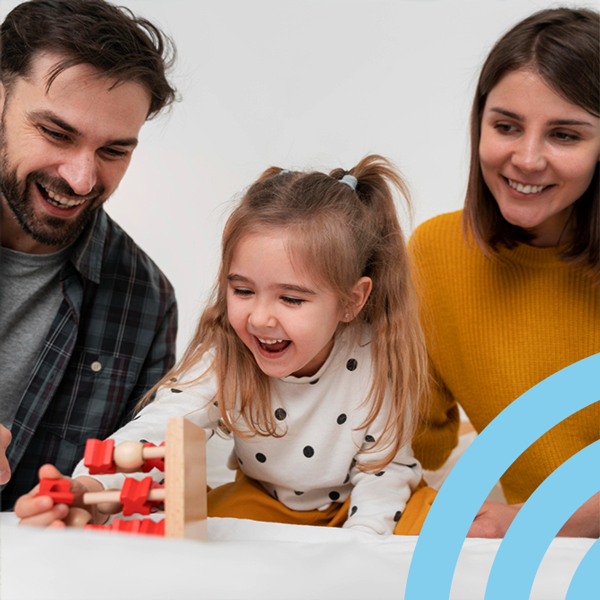
DIR/Floortime is a gentle, relationship-based developmental therapy, especially effective for children with autism. Through play, children explore, connect, and transform everyday moments into joyful discovery and functional growth. We look beyond behaviors to understand the biological and developmental reasons behind them.

The heart of DIR:

Developmental We meet your child at their current functional level and build skills step-by-step. By following the six core developmental milestones (FEDCs), we guide natural, meaningful progress that fits their unique abilities.
Individual Differences We honor the unique way your child’s body and mind work. By understanding their sensory, motor, and communication profile, we adjust our interactions and the session environment to support exactly how your child is wired to learn.
Relationship-Based We build a strong, trusting connection first. By using purposeful affect (emotional energy) to follow your child’s lead, we create the safety and joy needed to gently challenge them to stretch their skills and thrive.

DIR foundations

Circles of
Communication

Children and adults engage in back-and-forth signaling. Each such “circle” builds shared attention and connection — the essential building blocks for all future conversation.

Play-Based
Development

Learning unfolds through child-led play. Curiosity, imagination, and logical thinking  grow naturally as children explore the world around them. They build the skills to climb the developmental ladder.

Parent
Partnership

Parents are the heart of the team. You’ll learn to use purposeful affect to foster co-regulation: balancing emotions together so your child stays calm, engaged, and ready to learn.

What parents want to know about DIR

1. What is DIR/Floortime therapy?

It’s a relationship-based developmental therapy that helps children grow through play and meaningful connection. Instead of focusing on behaviors, DIR meets your child where they are—gently building communication, emotional regulation, and social-problem solving in ways that feel natural and joyful.

Unlike structured or drill-based approaches, DIR focuses on your child’s individual profile, sensory needs, and emotional development. It emphasizes connection first, letting learning unfold naturally through back-and-forth signaling and real-life experiences.

Both approaches are relationship-based, but they differ in setting and goals:

  • DIR/Floortime: Uses purposeful affect (emotional energy) to build developmental milestones across all environments—home, school, and community. It is a clinical model led by trained therapists.
  • Son-Rise Program: Creates connection by joining a child’s repetitive behaviors in a quiet, controlled room, often guided primarily by parents or volunteers.

 DIR/Floortime emphasizes long-term developmental growth, while Son-Rise focuses more on calm, one-on-one connection.

DIR/Floortime supports children from infants through school age, and sometimes older. Because we focus on the developmental ladder rather than chronological age, therapy is tailored to your child’s unique stage of growth.

DIR/Floortime happens in the environments that are most meaningful to your child—home, school, daycare, or community settings.Working in natural environments helps children generalize their new skills and maintain co-regulation throughout their daily lives.

 Parents are key partners in DIR/Floortime. You’ll learn to read your child’s sensory and motor cues and use your own affect to support their growth. You aren’t just observing; you are gaining the tools to foster development every day.

 Yes. All NJ Medicaid plans and most commercial insurance policies cover DIR/Floortime therapy. We verify your benefits upfront so you know exactly what’s covered before starting.

Every child’s nervous system is unique. While some show changes quickly, others progress gradually as they build a stronger developmental foundation. Lasting growth takes time, but parent involvement is the greatest “accelerator” for progress.

 It’s a collaborative, low-pressure process. Our clinicians observe how your child signals, communicates, and regulates emotions. We look at their motor and sensory profile to create a map for our journey together.

DIR: Climbing the Developmental ladder

The 6 Functional Emotional Developmental Capacities (FEDCs)

Level

Milestone

What it looks like

What DIR nurtures

Social and emotional growth

Shared interactions, emotional awareness, self-confidence

Stronger communication and regulation

Expressing wants and needs, focused attention, emotion control
A closer parent–child bond

Everyday closeness, shared feelings, deeper understanding

Thinking and imagination

Creative thinking, problem solving, imaginative play

What DIR nurtures

Social and emotional growth

Shared interactions, emotional awareness, self-confidence

Stronger communication and regulation

Expressing wants and needs, focused attention, emotion control

A closer parent–child bond

Everyday closeness, shared feelings, deeper understanding

Thinking and imagination

Creative thinking, problem solving, imaginative play

What DIR nurtures

Shared interactions, emotional awareness, self-confidence
Social and emotional growth
01
Expressing wants and needs, focused attention, emotion control
Stronger communication and regulation
02
Everyday closeness, shared feelings, deeper understanding
A closer parent–child bond
03
Creative thinking, problem solving, imaginative play
Thinking and imagination
04

Every dream begins

with a small step.

Through connection and understanding, DIR brings your dream closer to reality. We’re here to walk alongside you and help your child succeed.