Introduction
If you’ve been researching autism therapies, you’ve likely come across the term DIR Floortime. But what does it actually mean, and how does it help children grow?
For parents, educators, and developmental professionals across New Jersey, understanding the why behind a therapy approach is just as important as the results it delivers.
DIR Floortime therapy is more than a technique, it’s a developmental framework that helps children build the foundation for communication, emotional connection, and learning through meaningful relationships.
In this guide, we’ll break it all down in a clear, practical way, so you can confidently understand how DIR Floortime works and why it’s gaining traction across New Jersey.
What Does DIR Floortime Stand For?
DIR Floortime is based on three core components:
1. Developmental (D)
This focuses on where a child is in their emotional and cognitive development.
Rather than pushing skills too quickly, DIR supports children in moving through key developmental stages, such as:
- Engagement and shared attention
- Two-way communication
- Emotional thinking and problem-solving
2. Individual Differences (I)
Every child processes the world differently.
DIR takes into account factors like:
- Sensory sensitivities (sound, touch, movement)
- Motor skills
- Language abilities
- Emotional regulation
We’ve seen in our sessions that when therapy adapts to a child’s individual profile, rather than expecting the child to adapt to the therapy, progress becomes more natural and sustainable.
3. Relationship-Based (R)
Relationships are the foundation of learning.
DIR Floortime uses interactions with caregivers, therapists, and educators to help children:
- Build trust
- Stay engaged
- Communicate more effectively
These relationships are not just supportive, they are the primary tool for development.
What Is “Floortime”?
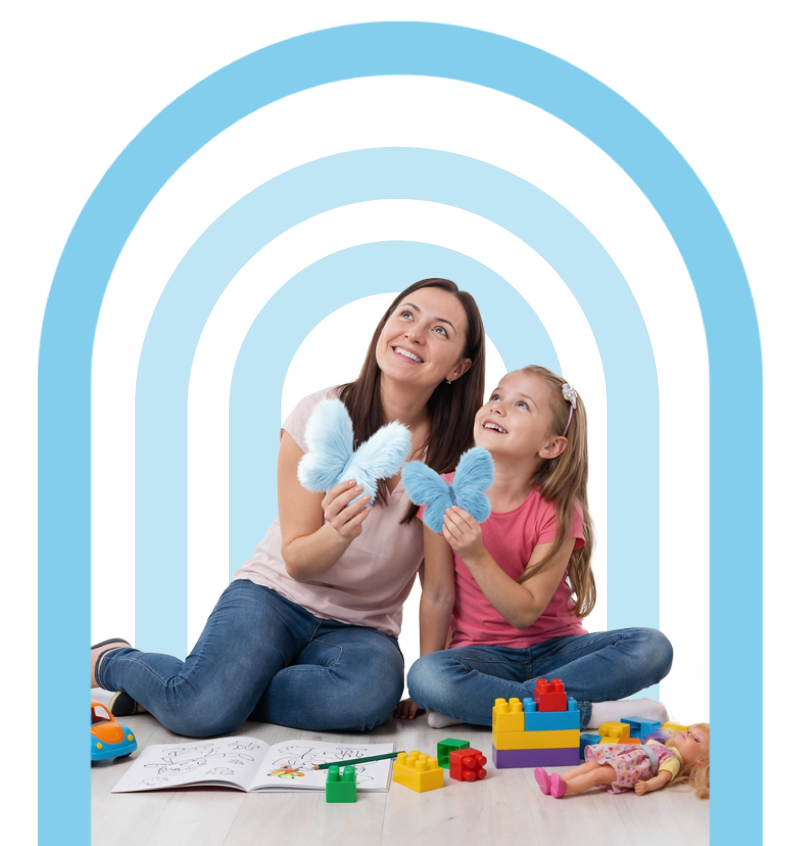
“Floortime” refers to the interactive, play-based method used within the DIR model.
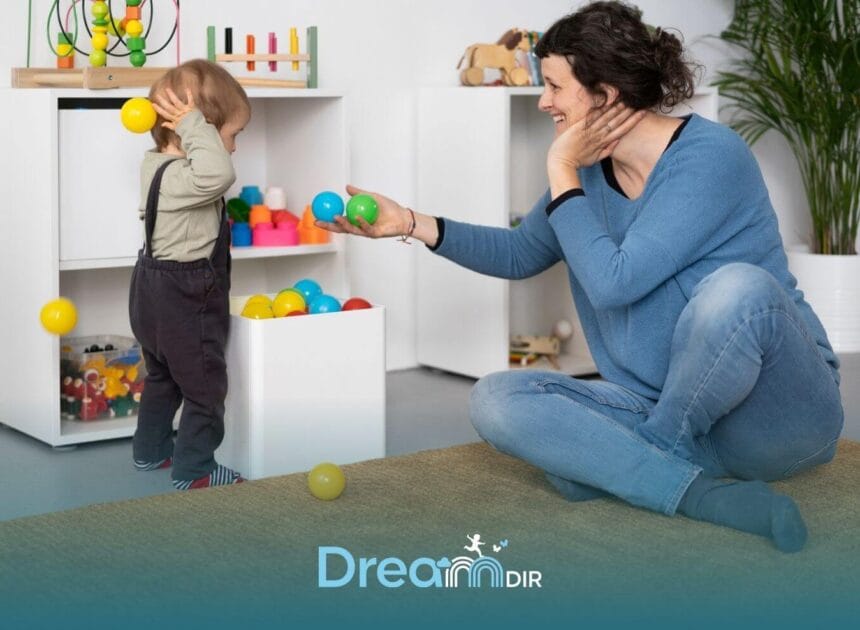
It’s called Floortime because adults often get down on the child’s level, physically and emotionally, to engage with them in a meaningful way.
Instead of directing the child, Floortime involves:
- Following the child’s lead
- Joining in their play
- Expanding interactions step by step
For example, if a child is lining up cars, a therapist might join by adding another car or creating a simple interaction, like a “crash” or a shared movement.
From there, the interaction grows.
We’ve worked with children who initially preferred solitary play. Through consistent Floortime engagement, they began inviting others into their play, something that once felt out of reach.
The Developmental Stages in DIR Floortime
DIR Floortime focuses on helping children move through key developmental capacities (often called “milestones”).
Here’s a simplified breakdown:
1. Self-Regulation and Interest in the World
Children learn to stay calm, alert, and engaged.
2. Engagement and Relating
Building emotional connections with others.
3. Two-Way Communication
Back-and-forth interaction, through gestures, sounds, or words.
4. Complex Communication
Longer chains of interaction and shared problem-solving.
5. Emotional Ideas
Using imagination and symbolic play.
6. Emotional Thinking
Understanding emotions, perspectives, and logic.
In practice, we’ve seen children move from brief, disconnected interactions to sustained engagement where they initiate play, respond to others, and express ideas more clearly.
What Does a DIR Floortime Session Look Like?
One of the most common questions parents ask is: “What actually happens during a session?”
DIR Floortime sessions are flexible and tailored, but often include:
- Play-based interaction (toys, games, activities your child enjoys)
- Back-and-forth engagement (verbal or nonverbal)
- Gentle challenges to expand communication
- Emotional support to help regulation
Sessions may take place:
In our experience, sessions often feel less like “therapy” and more like guided interaction. That’s intentional.
Children are more likely to learn when they feel:
- Safe
- Engaged
- Interested
How DIR Floortime Supports Children with Autism
DIR Floortime is especially effective for children with autism because it addresses core challenges in a natural, developmentally appropriate way.
1. Communication Development
Children learn to communicate with purpose, not just repetition.
We’ve seen children go from minimal interaction to initiating gestures, sounds, and eventually words through consistent engagement.
2. Social Interaction
DIR helps children build meaningful connections with others.
Over time, children begin to:
- Share attention
- Respond to social cues
- Enjoy interaction
3. Emotional Regulation
Many children with autism experience sensory and emotional challenges.
DIR supports regulation by:
- Meeting children where they are
- Reducing pressure
- Building tolerance for interaction
4. Flexible Thinking
Children learn to adapt, problem-solve, and engage in more complex interactions.
This becomes especially important in school and social environments.
Why DIR Floortime Is Growing in New Jersey
Across New Jersey, there’s an increasing demand for therapies that go beyond surface-level skill building.
Families and professionals are looking for approaches that:
- Address the whole child
- Support emotional and social development
- Integrate into everyday life
DIR Floortime aligns with these goals.
Educators and therapists in New Jersey are also recognizing the importance of relationship-based learning, especially for children who may not respond well to more structured approaches.
Who Uses DIR Floortime?
DIR Floortime isn’t limited to therapists, it’s a collaborative approach used by:
- Parents and caregivers
- DIR/Floortime therapists
- Speech and occupational therapists
- Teachers and school personnel
In many cases, the most meaningful progress happens when multiple people in a child’s life use the same approach consistently.
We’ve seen families incorporate Floortime strategies into daily routines, like mealtime, playtime, and transitions, leading to more consistent engagement throughout the day.
Real-Life Example: What Progress Can Look Like
To make this more tangible, here’s a real-world type of scenario we often see:
A child begins therapy with:
- Limited eye contact
- Minimal communication
- Preference for playing alone
Through consistent DIR Floortime sessions:
- The child starts to tolerate shared play
- Begins responding to simple interactions
- Eventually initiates engagement (bringing toys, making sounds, seeking attention)
These changes don’t happen overnight, but they are meaningful, lasting, and built on real connection.
Is DIR Floortime the Same as Other Autism Therapies?
DIR Floortime is unique because it focuses on developmental relationships, rather than just behaviors or isolated skills.
While other therapies may emphasize structure and repetition, DIR emphasizes:
- Emotional connection
- Child-led interaction
- Developmental progression
Each approach has its place, and understanding the differences can help families choose what aligns best with their goals.
How to Get Started with DIR Floortime in New Jersey
If you’re interested in DIR Floortime, here’s how to begin:
- Learn the basics of the DIR model
- Connect with trained DIR/Floortime professionals
- Observe how your child responds to interaction-based play
- Look for providers who personalize their approach
Even small shifts, like following your child’s lead during play, can make a noticeable difference.
Conclusion
DIR Floortime isn’t just about helping children learn, it’s about helping them connect, communicate, and grow in a way that feels natural to them.
For families and professionals in New Jersey, this approach offers something powerful:
A way to support children not just in what they do, but in how they relate to the world around them.
And in our experience, that’s where the most meaningful progress begins.
At Dream DIR Floortime Therapy, we specialize in relationship‑based interventions that nurture emotional connection and developmental growth through floortime therapy in New Jersey. Our team of experienced DIR/Floortime professionals partners with families, educators, and developmental specialists to create individualized programs that help children thrive at home, in school, and in the community.
Take the first step toward building lasting progress for your child. Contact us today!
Frequently Asked Questions
What is DIR/Floortime therapy and how does it help children with autism?
DIR/Floortime therapy is a developmental, relationship‑based approach that uses play and interaction to build communication, emotional regulation, and social skills.
At what age can children start DIR/Floortime therapy?
Therapy can begin as early as toddlerhood. Early intervention is highly effective in supporting developmental outcomes, but older children and adolescents also benefit.
How do families in New Jersey access DIR/Floortime therapy services?
Families can connect directly with providers like Dream DIR Floortime Therapy or request referrals through pediatricians, schools, or local autism organizations.
SOURCES:
- https://pmc.ncbi.nlm.nih.gov/articles/PMC10275467/
- https://en.wikipedia.org/wiki/Floortime
- https://www.mayoclinic.org/diseases-conditions/autism-spectrum-disorder/symptoms-causes/syc-20352928
- https://www.who.int/news-room/fact-sheets/detail/autism-spectrum-disorders
- https://www.psychiatry.org/patients-families/autism/what-is-autism-spectrum-disorder