In-home DIR/Floortime therapy
It all starts at your front door.
Our DIR therapists come to your New Jersey home, meeting your child through play and connection. No clinic visits. No waiting rooms. Just growth in the space where your child already feels safe.









A day in your living room
We come to you
No stressful commutes. No parking battles. No overwhelming clinic environments. Your therapist arrives at your door, and therapy happens where your child already feels comfortable.
Connection starts where your child is
If your child is lining up cars, we don't redirect them. We join them. We add a sound effect. We create gentle back-and-forth. We expand their interest into interaction—naturally, joyfully, without force.
You're part of every moment
You watch everything unfold. You see your child glance up more. You notice when they start inviting you into play. You learn the strategies in real time, so connection continues long after the therapist leaves.
We work on your real day
We tackle the real morning routine. The real dinner table. The real bath time. The actual moments that matter in your New Jersey home—not pretend scenarios in a clinic.
Consistency matters
Your child works with the same therapist every session. They build real trust with someone who learns what delights them, what overwhelms them, and what helps them flourish.
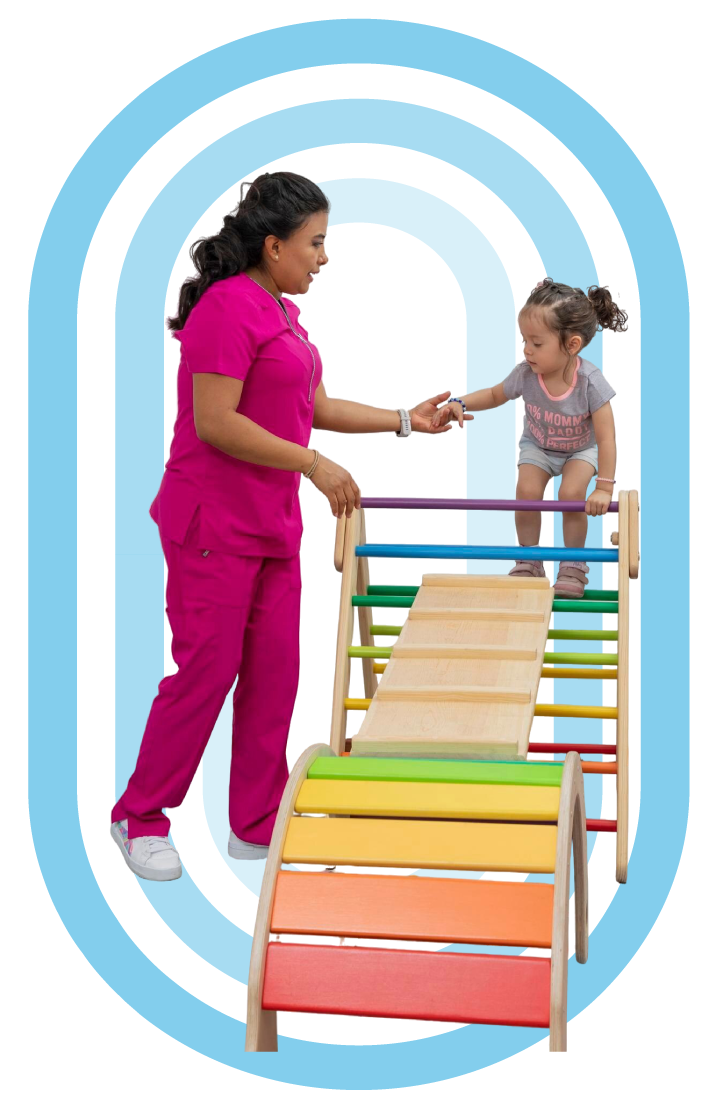
It’s all natural and familiar
They’re learning in their own space, surrounded by their toys, their routines, their family. They’re more relaxed. More open. More ready to connect.
In-home DIR/Floortime tackles the real moments you face every single day.
No commute eating up your afternoon. No transitions that trigger meltdowns. Just expert therapy that fits your family’s life, and respects your child’s rhythm.

The shifts parents notice

Morning routines feel calmer instead of chaotic

Your child stays engaged longer during play

Meltdowns happen less, and end faster

Your child starts seeking you out for connection

Communication emerges naturally through play

Bedtime becomes manageable, not a battle
Growth through connection
Your child is navigating specific challenges. We address them through play and relationship:

Communication
that feels natural
Not through flashcards—through play. Your child gestures for more bubbles. Vocalizes when the tower falls. Uses words because connection makes them want to share.
Emotional regulation
that builds from within
When your child gets overwhelmed, we don’t punish or ignore it. We co-regulate with them. Over time, they build their own capacity to feel and move through emotions.
Social problem-
solving through play
How do we build this tower together? What happens if we take turns? Social thinking grows through playful challenges that feel like discovery, not demands.
Engagement
and attention
Your child’s attention span grows—not because we force compliance, but because interaction becomes interesting. They want to see what happens next.
Self-care and
independence
Getting dressed. Brushing teeth. Transitioning between activities. We weave development into your home routines, building skills through playful support.

All of it happens in your home, woven into your family’s daily life.
In-Home DIR/Floortime Reviews from NJ Families


Before Dream DIR, afternoons in our home were overwhelming. Our son would shut down after school, and we didn’t know how to reach him. Within weeks of in-home Floortime, we started seeing small changes—more eye contact, more shared moments. Now he seeks us out. The fact that therapy happens in our home made all the difference.
We tried clinic-based therapy before, but nothing transferred to real life. Dream DIR coming into our home changed everything. They helped us through our actual routines—mealtime, bedtime, getting ready for school. It’s not just therapy sessions—it’s our whole day improving.
What stood out immediately was how respectful and thoughtful the therapist was. Instead of correcting my daughter, she joined her world. I learned how to do the same. Now we’re connecting in ways I didn’t think were possible before.
Being part of every session was huge for us. We weren’t sent to a waiting room—we were included. We learned how to respond, how to support, how to build connection. It doesn’t stop when the therapist leaves, and that’s why it works.
Our biggest struggle was emotional regulation. Everything felt like a battle. Dream DIR helped us understand what was underneath those moments. Now our child recovers faster, and honestly, our home feels calmer and more manageable.
We weren’t looking for compliance—we wanted connection. With DIR/Floortime at home, everything feels natural. Our son communicates because he wants to, not because he’s being prompted. That shift is everything.
Having the same therapist every time helped build trust so quickly. Our child actually gets excited when she arrives. That relationship is what makes the progress possible.
No commuting, no waiting rooms, no stressful transitions. Therapy just… happens in our home. It feels like support, not disruption. As a working parent, that matters more than I can explain.
We were told progress could take a long time, but we started noticing small shifts within weeks—more engagement, more smiles, more shared attention. Those small moments added up fast.
How we're different
"Your child just isn't motivated."
Every child is motivated by something—usually connection. Our job is to find what lights them up, not force them into a template.
"We'll work on this in the clinic, and it'll transfer home."
That's backwards. We work in your home because skills need to be learned where they'll actually be used.
"Parents should observe from another room."
You're not a distraction. You're essential. We want you involved, watching, learning, and connecting with your child.
"This should be working by now."
Every child is different. If something isn't clicking, we change our approach—not blame your child.
"Just be firmer with consequences."
We're not here to make you a drill sergeant. DIR is about understanding your child's inner world, not controlling their behavior.
"Give it more time."
Time alone doesn't create progress. Strategic, attuned intervention does. If we're not seeing connection deepen, we adjust.
Simple steps from here to there
You reach out
Call 973-899-8556 or fill out our contact form. We answer your questions honestly, verify your New Jersey insurance, and explain what happens next.
We meet at your home
A DIR therapist comes to your home for a comprehensive evaluation. We observe how your child engages, communicates, and regulates in their own space. We talk about what’s hard right now and what you’re hoping for.
We create a personalized plan
No templates. No generic programs. An actual individualized plan based on your child’s unique profile and your family’s real goals.
We handle all insurance authorization
You won’t spend hours on hold with your insurance company. We submit everything, manage the paperwork, and get authorization. All NJ Medicaid plans and most commercial insurance cover DIR/Floortime.
Therapy begins
Your therapist starts coming to your home for regular sessions. Connection deepens. Skills emerge. Progress gets tracked, and your supervising therapist adjusts strategies as your child grows.
You see what's working
We measure progress through engagement, communication, and connection—not compliance. You’ll see your child staying in interaction longer, seeking you out more, expressing themselves better.

Leo's story: When joy found its way in
The beginning
When Leo’s parents called Dream DIR, their Montclair home felt heavy. Leo, age 6, spent the school day working on skills. By the time he got home, he seemed exhausted and withdrawn. He’d retreat to his room, alone.
“We were losing him,” his mom told us. “He felt so far away.”
The plan
Our DIR therapist, Sarah, started slow. She didn’t demand Leo engage. She followed his interests—trains, mostly. She sat near him. Made gentle sounds. Waited.
She built a treatment plan around Leo’s real life at home:
- Follow his lead during play
- Create opportunities for back-and-forth without pressure
- Help parents recognize when Leo was seeking connection
- Build co-regulation during hard moments
The work
Sarah showed up three afternoons a week. She worked with Leo during his real afternoons at home—not a clinical setting.
When Leo retreated, Sarah didn’t chase. She created small invitations to connect. When he glanced her way, she responded warmly. When he brought her a train, she celebrated that moment of sharing.
His parents watched every session. Learned how to read Leo’s subtle cues. Started creating their own moments of connection.
The results
After six weeks: Leo was staying in play longer. Making more eye contact.
After three months: He started inviting his parents into his play. “Come see,” he’d say—words they hadn’t heard in months.
After six months: Leo laughed during family dinner. He initiated hugs. He still needed downtime, but home stopped feeling like another place he had to perform.
“The best part?” his mom said. “He’s happy again. He wants to be with us. Connection doesn’t feel impossible anymore.”
The beginning
When Leo's parents called Dream DIR, their Montclair home felt heavy. Leo, age 6, spent the school day working on skills. By the time he got home, he seemed exhausted and withdrawn. He'd retreat to his room, alone.
"We were losing him," his mom told us. "He felt so far away."
The plan
Our DIR therapist, Sarah, started slow. She didn’t demand Leo engage. She followed his interests—trains, mostly. She sat near him. Made gentle sounds. Waited.
She built a treatment plan around Leo’s real life at home:
- Follow his lead during play
- Create opportunities for back-and-forth without pressure
- Help parents recognize when Leo was seeking connection
- Build co-regulation during hard moments
The work
Sarah showed up three afternoons a week. She worked with Leo during his real afternoons at home—not a clinical setting.
When Leo retreated, Sarah didn’t chase. She created small invitations to connect. When he glanced her way, she responded warmly. When he brought her a train, she celebrated that moment of sharing.
His parents watched every session. Learned how to read Leo’s subtle cues. Started creating their own moments of connection.
The results
After six weeks: Leo was staying in play longer. Making more eye contact.
After three months: He started inviting his parents into his play. “Come see,” he’d say—words they hadn’t heard in months.
After six months: Leo laughed during family dinner. He initiated hugs. He still needed downtime, but home stopped feeling like another place he had to perform.
“The best part?” his mom said. “He’s happy again. He wants to be with us. Connection doesn’t feel impossible anymore.”
In-home therapy across the Garden State
Dream DIR brings in-home therapy to families across New Jersey. No matter where you’re located, our therapists come to your home.
North Jersey:
- Bergen County
- Passaic County
- Essex County
- Morris County
- Hudson County
- Sussex County
- Warren County
Central Jersey:
- Union County
- Middlesex County
- Somerset County
- Hunterdon County
- Mercer County
- Monmouth County
South Jersey:
- Ocean County
- Burlington County
- Camden County
- Gloucester County
- Salem County
- Cumberland County
- Cape May County
- Atlantic County
Whether you’re in Newark, Princeton, Cherry Hill, or Toms River—we bring DIR/Floortime therapy to your door.
Questions New Jersey families are asking
How many hours of therapy will my child need per week?
Most children benefit from 5-15 hours weekly, depending on their needs. Your supervising therapist recommends specific hours based on your child’s profile and what insurance will authorize.
Will we have the same therapist every time?
Yes. Consistency is essential for building connection. Your child develops trust with their therapist, and that relationship drives progress.
Do I need to be home during sessions?
Most parents want to be present, especially initially. You can participate actively, observe quietly, or step away when needed—whatever works for your family that day.
What if my child doesn't engage with new people easily?
Our therapists are trained to meet resistant or withdrawn children exactly where they are. We start slow. We follow their lead. If they need space, we give space. Connection can’t be forced.
How long will it take to see changes?
Every child is different. Some families notice shifts within weeks—longer eye contact, more engagement. Others take months. But when DIR is working, you feel it: connection deepens, joy emerges, your child seems more present.
Does insurance cover in-home DIR/Floortime?
Yes. New Jersey law requires Medicaid and most major insurance plans to cover DIR/Floortime therapy for children with autism. We verify your specific benefits upfront.
Can we reschedule if something comes up?
Life happens. We work with you. Reschedule when you need to.
What if we're not seeing progress?
We track engagement, communication, and connection constantly. If progress stalls, we adjust strategies. We don’t keep doing the same thing and hoping for different results.
What if my child has intense behaviors at home?
We don’t punish or ignore behaviors. We understand them as communication. Our therapists help figure out what your child is trying to express, then support them in finding better ways to communicate their needs.
Connection is waiting
Dream DIR is ready to come to your New Jersey home, meet your child where they are, and help your whole family move from disconnection to connection.
Every dream begins with one small step. Let’s take it together.